About

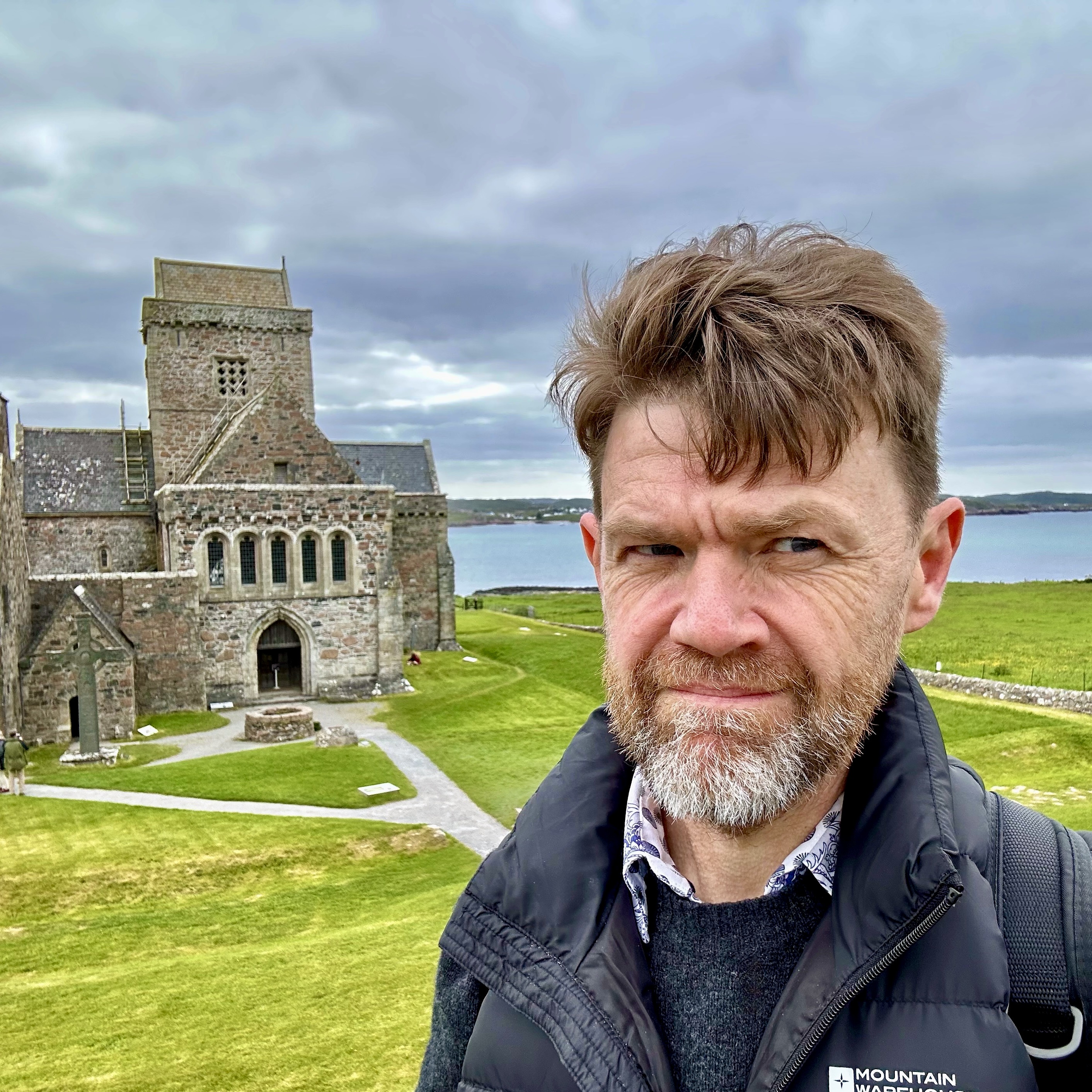
I'm Greg Restall, and this is my website. I work in Philosophy at the University of Melbourne. [Email: greg at consequently.org; Skype: greg_restall; Post: Department of Philosophy, University of Melbourne, Parkville 3010, Australia.]

Writing

These are the three last modified entries on my writing page.

  • “Truthmakers, Entailment and Necessity 2008,” an addendum to “Truthmakers, Entailment and Necessity,” to appear in Truth and Truth-making, edited by E. J. Lowe and A. Rami, Acumen, 2008.
  • [with Rebecca Kukla and Mark Lance] Appendix to Rebecca Kukla and Mark Lance ‘Yo!’ and ‘Lo!’: the pragmatic topography of the space of reasons, Harvard University Press, to appear.
  • “Curry’s Revenge: the costs of non-classical solutions to the paradoxes of self-reference,” in The Revenge of the Liar, ed. JC Beall, Oxford University Press, pages 262–271, 2008.
  • “Anti-Realist Classical Logic and Realist Mathematics,” under revision.
  • “Proof Theory and Meaning: on second order logic,” to appear in the Logica 2007 Yearbook, Filosofia.

My talk in Banff

I’ve finished up the slides for my talk in Banff. If you’re interested, the slides are available here

Modal Models for Bradwardine’s Truth [1.3MB pdf]

It’s a talk giving a modal logic interpretation for a medieval theory of truth due to Thomas Bradwardine, as it’s reconstructed by Stephen Read. This will hopefully help out Steve’s project, by providing tools for exploring the strength of this kind of theory of truth.

I’ll write up an extended paper version of this after getting comments from the audience. Since the audience contains people who know a heck of a lot more than me about truth and about modal logic, I’m a little more on the anxious side than usual for such things. Wish me luck!

Posted 03:23 AM on February 23, 2007

Comments

I like that the title of the last slide is also the title of the last song in “Once more with feeling”.

Richard Zach , February 23, 2007 11:02 AM

Good luck! I haven’t had time to look closely at it yet, but this seems like perfect material for our St. Andrews reading group on Bradwardine’s text. I sent the link to the post to Steve and the other members.

Ole Thomassen Hjortland , February 24, 2007 01:19 AM

The slides don’t do justice to just how good of a talk Greg gave. On the other hand, the slides do provide the basic insight. Thanks to Greg’s model(s), I finally have a sense of what’s really going on with these approaches (e.g., Steve’s, Bradwardine, Buridan). In particular, as Greg makes plain, there’s a lot involved in the ‘says that’ expression. What was nice about Greg’s talk is that he emphasized that the given Liar ‘solution’ falls out of a general approach to ‘says that’. This is one thing that nicely distinguishes this sort of approach from similar approaches that give up unrestricted Capture in either conditional or rule form or both. (E.g., Kripke-Feferman, Maudlin, and others, who give up A=>Tr(), where => is either one’s conditional or a turnstile/rule.) In this family is also Gary Hardegree’s axiomatic theory, which pays attention to ‘says that’, but in a way that differs a bit from Greg’s model, I think.)

(One more comment about the actual event: I heard at least 9 different people applaud Greg’s presentation. He really presents things well.)

JC Beall , February 25, 2007 07:29 AM

I always thought the real meat of Bradwardine’s approach was his second thesis (and its proof), that any proposition which says of itself that it is false (or not true), also says of itself that it is true (and consequently is false). So it’s interesting that Greg manages to run the whole thing without invoking that thesis. However, that puts him in with William Heytesbury (contemporary of Bradwardine) and Arthur Prior, in remarking that such propositions which say of themselves that they are false also say something else (which fails to obtain, since they are false) without giving any clue as to what that might be.

At the end of the talk, Greg floats the possibility that (∀x)(Dx ⊃ x:Tx). That’s characteristic of John Buridan and Albert of Saxony, in the next generation. I don’t believe Bradwardine would have accepted it (at least, not without proof - and Buridan gives none, Albert one that is completely unconvincing). I worry that that would undercut the theory of truth, but have never felt I articulated that thought clearly. What do Greg and others think?

Stephen Read [TypeKey Profile Page], February 26, 2007 03:27 AM

Hi, everyone.

I think that the issue of whether x:~Tx => x:Tx is a very interesting one. In my talk, and in the earlier version of the slides, I claimed a counterexample to the thesis modally and relevantly. Writing up the argument, the relevant counterexample has collapsed, but the modal counterexample stands. If we have two worlds, and the accessibility relation for our liar object (λ) relates one world to the other, but no world to itself, then at each world λ:~Tλ holds, but at each world, λ:Tλ is false.

If we want to take the modal Bradwardine axiom to be sufficient to give an account of Bradwardine’s closure thesis, then we need something else to ground the conclusion. I haven’t yet gone through the argument in detail to explain how it fails in this kind of model, but I suspect that there is a step where we treat λ:p as necessary if true (substituting it into a modal conditional context, etc.). This is a subtle matter, and I find the models clarifying. λ:~Tλ at every world. At world 1, λ:p, where p is a proposition true at world 2 only. At world 2, λ:p is false, but λ:~p is true. What things say is not modally constant.

As to what happens in relevant contexts, I’m still working on it. The models are certainly subtle.

In the talk, I mention that (∀x)(Dxx:Tx) holds in our models. This folows from the fact that in the models I construct, whenever aRb then bRb. This is an inessential feature of the models, and I much prefer models without it. Hopefully the model theory will be a useful tool in examining the behaviour of such things.

Greg Restall [TypeKey Profile Page], February 26, 2007 09:58 AM


Remember me?


© Greg Restall, 2002–2006 • Powered by teTeX, TeXShop, Safari, Movable Type, MT SomeDays, MultiBlog, MagpieRSS, del.icio.us, Arvo Pärt, Bruce Cockburn & you, the reader.