Web
About
I'm Greg Restall, and this is my website. I work in Philosophy at the University of Melbourne. [Email: greg at consequently.org; Skype: greg_restall; Post: Department of Philosophy, University of Melbourne, Parkville 3010, Australia.]
Links
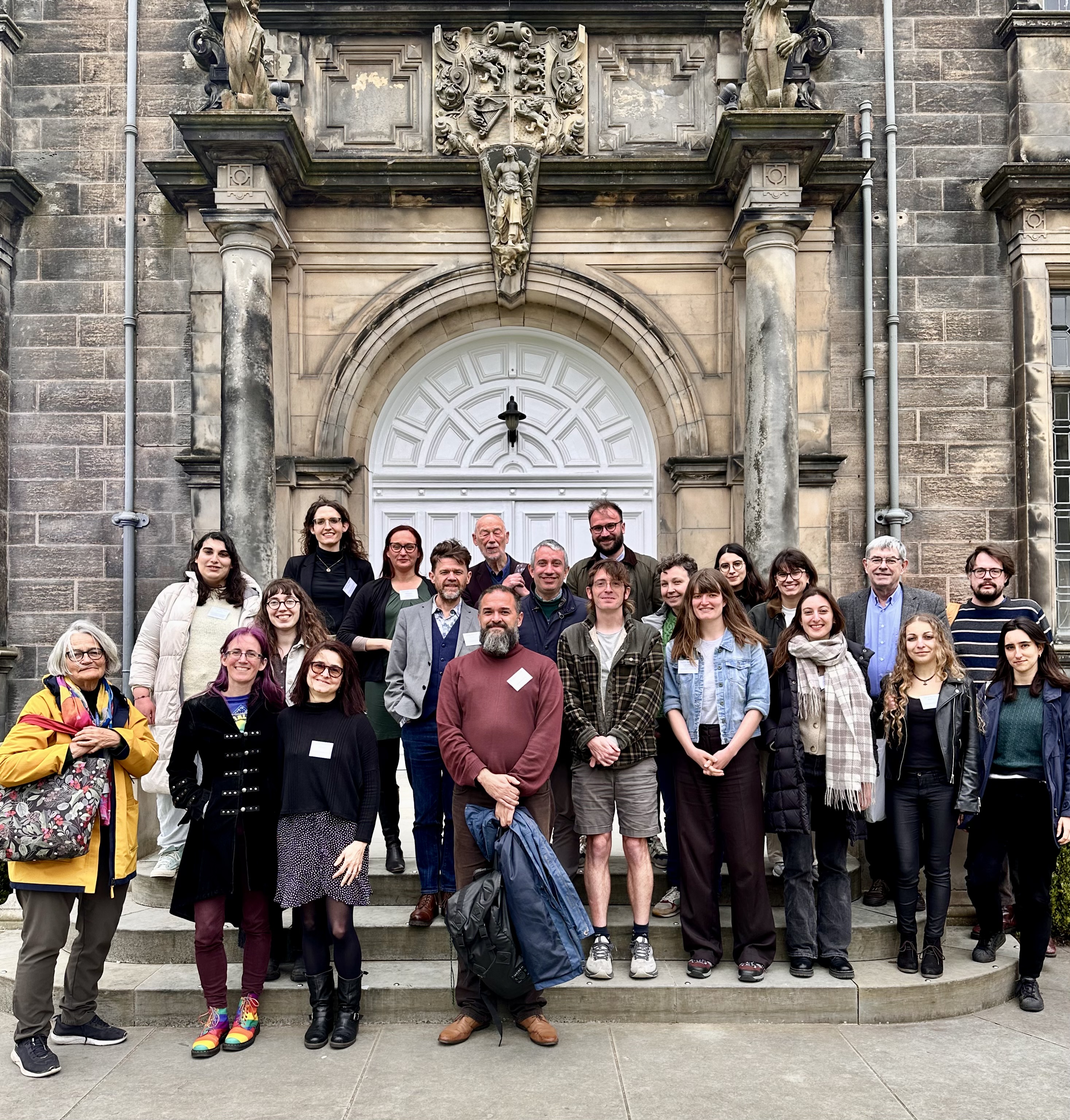
- Photos from the "Logical Pluralism" conference in Tartu: There I am, holding forth...
- Charles Taylor 's A Secular Age: Reviewed by Michael L. Morgan, in NDPR: Interesting review of a big book.
- Inferentialism: Logic and Language: Jaroslav Peregrin's book-in-progress on Inferentialism. It looks like a really interesting project.
- Mathematics and Computation » Intuitionistic mathematics for physics: Andrej Bauer on why physicists should like intuitionistic mathematics.
- How to do research - special free sample: Good advice on how to keep up with what's happening in your field
These and more links are available at del.icio.us/greg_restall.
Writing
These are the three last modified entries on my writing page.
- “Proof Theory and Meaning: on second order logic,” pp 157-170 in Logica 2007 Yearbook, edited by Michal Pelis, Filosofia, 2008. →
- “Assertion and Denial, Commitment and Entitlement, and Incompatibility (and some consequence),” to appear in Logical Studies, a new journal published by the Institute for Logic and Cognition at Sun Yat-Sen University →
- “Logic in Australasia,” to appear in a volume on the History of Philosophy in Australia and New Zealand, edited by Nick Trakakis and others, Lexington Books. →
- “Truthmakers, Entailment and Necessity 2008,” an addendum to “Truthmakers, Entailment and Necessity,” to appear in Truth and Truth-making, edited by E. J. Lowe and A. Rami, Acumen, 2008. →
- [with Rebecca Kukla and Mark Lance] Appendix to Rebecca Kukla and Mark Lance ‘Yo!’ and ‘Lo!’: the pragmatic topography of the space of reasons, Harvard University Press, to appear. →
World
Snapshot

van Benthem, Read, Restall, Pagin, Cohnitz, Bremer, Westerstahl - Estonia, August 29, 2008
Events
AAL2007: the annual conference of the Australasian Association for Logic, University of Melbourne November 9 to 11, 2007.
Recent Past
University of Melbourne Philosophy Undergraduate Workshop, University of Melbourne September 21 to 23, 2007.
Logic Colloquium 2007, Wrocław, Poland, July 14-19, 2007.
1st GPMR Workshop on Logic & Semantics on Medieval Logic and Modern Applied Logic, Rheinische Friedrich-Wilhelms-Universität Bonn, Germany, on June 28-30, 2007.
Logica 2007, Hejnice Monastery, Czech Republic, 18-22 June 2007.
Heart of Philosophy Café talk and discussion on “What Marx, Freud and Nietzsche have taught me about belief in God”. Tuesday May 8, 7--9pm in the Merrick's General Store.
Tartu Pluralism Days #3 and #4
Phew! What a long rest-of-the conference! I’m now back in Tallinn, after the rest of the conference: 5 talks on Day 3, and one wrapup talk on Day 4. My comments concerning Days 3 and 4 will not be as extensive as those for Days 1 and 2. I liked these as much as the earlier talks — it’s just that my stamina has flagged.
Day 3
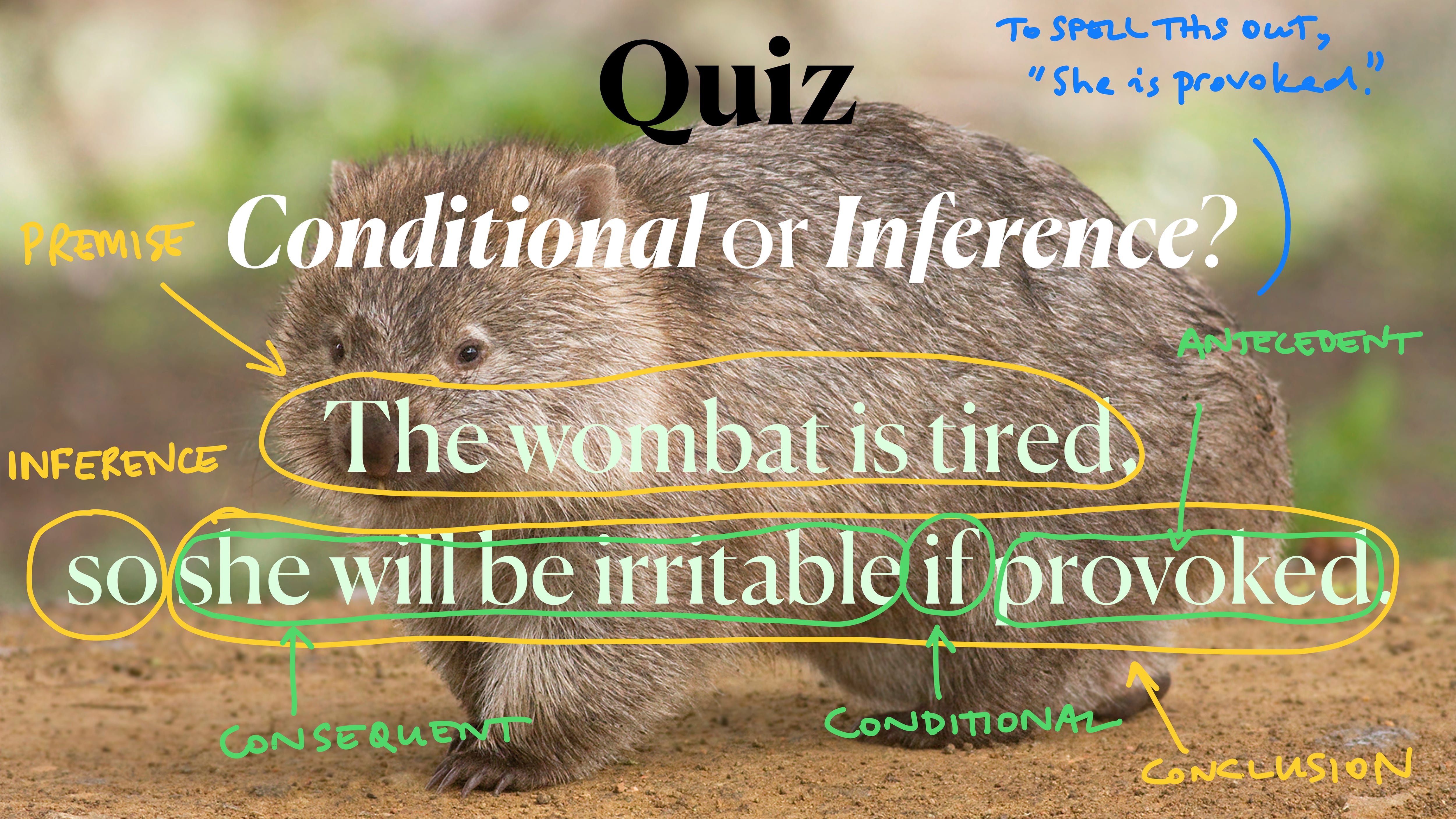
The day kicked off with Per Martin-Löf presenting ‘Is Logic about Consequence?’ I really enjoyed finally getting the opportunity to hear Per speak, as his view of logical consequence — a particular constructive type theory in which proof objects play a central role — has always fascinated me, but I’ve not looked into it in any depth. Per argued that logic is not primarily about conference, but must be also about the act of inference, and that distinguishing content and force in the judgement helps us understand the difference.
I think that this is clearly right, and in my work since the Logical Pluralism book I’ve started to attend to these issues. In “Multiple Conclusions” I attended to the connection between valid sequents and the acts of assertion and denial. While the account I give there is not one that Per would endorse, the constellation of issues connecting content and force, and the correctness of the steps we make in inferring conclusions from premises, are certainly in the domain of logic.
Then we had Dag Westerståhl with ‘Sources of Plurality.’ In this talk, Dag started off with our analysis of logical consequence as truth preservation in cases — and distinguished this from interpretational accounts, in which it is truth that counts, not hypothetical truth-in-some-case. Consequence differs from material consequence by the choice of logical vocabulary to keep fixed, and to vary the other vocabulary arbitrarily. Varying the choice of vocabulary gives you a range of different consequence relations. Dag had interesting results showing how to construct the vocabulary from the consequence relation rather than vice versa.
After lunch, we had Agustín Rayo working ‘Towards a Trivialist Account of Logic.’ This wasn’t really about pluralism as such, but rather, was about one sort of account of logical truths as statements which are, in a certain sense, trivial, those statements whose denial is unintelligible. Agustín connected the notion of intelligibility with identity (he argued that if you take a to be identical to b, then the de re consideration of a case where a is not b will strictly speaking be unintelligible) with modality (understood as truth in all intelligible scenarios) and why questions.
This was an interesting trinity of considerations, and most interesting for me was the methodological points Agustín made about the kinds of choice we have in forming vocabulary. The more identities we endorse, then the more scenarios become unintelligible, and the more why questions we cannot answer. (According to Agustín there is no answer to the question of why water is H2O, or why Hesperus is Phosphorous.) On the other hand, the more identities we endorse, the more consequences are derivable.
Agustín was followed by Marcus Rossberg with ‘Pluralism about Logic Proper,’ in which Marcus wanted to reconcile a Fregean view taking the topic-neutrality of logic seriously, with the pluralist sympathies of Carnap. Marcus developed the idea of a topic, for which different logics may be appropriate (say, constructive mathematics; quantum objects; etc.) and attempted to reconcile pluralism with a proper ‘lower limit’ logic which is most general and applicable for all topics.
Day 3 was wrapped up by Dag Prawitz who presented ‘Kinds of Pluralism in Logic’
Dag’s talk started off with an excellent summary of the kind of logical pluralism favoured by JC and me, and then he proceeded to inquire about what logic ought to say about an inference: a transition to a conclusion C from premises P, Q, etc. He did not think that either of the claims made in the book — (1) that if an argument is invalid then the inference from premises to conclusion makes a mistake or (2) that if an argument is valid, then it’s a mistake to assert the premises and deny the conclusion — sufficed to give an account of what is going on. Dag’s preferred story is that valid arguments provide a way to transform the grounds of the premises into a ground for the conclusion, and that if an argument is known to be valid, then the infer-er can use the argument to supply the ground for the conclusion of the argument.
There’s a lot to like about this view, I think. It has an account of where the difference lies in knowing that an argument is valid, by showing that this gives you a means to get from the premises to the conclusion, and there are very well developed theory of proofs (say, Per Martin-Löf’s proof objects or realisability semantics, or some other theory) which can give us accounts of the structures of such grounds and the way we can manipulate them (by taking them together in pairs; by applying one to another in modus ponens, etc).
Dag thought that this removed the need/desire for plurality, but I’m not sure about this. It seems to me that you could accept this, and think that there was a plurality, say, between deductive conseqence and formal consequence; and between classical formal consequence and intuitionist formal consequence; and perhaps also into relevant consequence —- if one had different accounts of what were allowable techniques for transforming one ground into another. Mathematical reasoning, for example, uses recursion as a technique for constructing a new ground out of old grounds, and this does not play a role in purely formal logical consequence. You might also say that classical reasoning uses a technique for constructing grounds (continuations, in the double-negation translation, or something more complicated with positive and negative ‘grounds’ in a symmetric proof system) that are not permitted with intuitionist ground-formation. The pluralist view of the move from premise to conclusion remains, but translated here into a very different key.
I think there’s lots more to think about here, and I’m looking forward to attempting to work some of it out, to see if the sketches I’m making here actually bear fruit. If you do any thinking on these issues — and get anywhere with them — please let me know.
Day 4
Then on Sunday, we wrapped up with one talk:
JC Beall, ‘Logical Pluralism, Validity and Truth-Preservation.’ Here, JC brought together his interest in the paradoxes and the logical pluralism with the negative result to the effect that truth-in-a-case can’t be identified with truth (in the actual world) for Curry-paradoxical reasons.
I’m not sure what I think about this — primarily because I don’t really have settled ideas of what to think about truth. It did convince me that it’s important to sort this out and be clear on the nature and properties of truth and its connections with logical consequence.
And that was it! It was a wonderful conference — Daniel, Marcus and Peter did a wonderful job organising, and we all enjoyed ourselves immensely. It was good to catch up with old friends and to make new ones. I’ve left with lots more things to think about, and some new ways to do that thinking. You can’t ask for anything more from a conference.
I’m writing this final report late in the evening in Tallinn. Tomorrow I take the long journey back to Melbourne, via Amsterdam and Singapore. Hopefully these conference reports have been useful if you weren’t able to come to the conference. Writing them helped me collect my thoughts.
September 1, 2008 • permanent link • 2 comments
Tartu Pluralism Day #2
OK, it’s a short day here today — thankfully, since I’m knackered after Day #1 — with two talks. Last night we dined at an Italian Restaurant, and I learned more about Roger Swyneshed from Stephen Read, than I ever expected to learn. Talks today are:
Peter Pagin, on Universalist and Actualist Consequence. Peter connected his work with Kathrin Glüer on relational modality and the semantics of names with considerations concerning the difference between universal validity (truth in all possible worlds whatsoever) and actualist validity (truth in all candidate actual worlds — down the diagonal in a 2D semantics, for example). He indicated that his looks like our distinction, both should count as validity notions which ought to be endorsed. Peter wondered whether this was a problem, and whether there’s a conflict between endorsing universalist validity and actualist validity.
This is a good question: I think that this is a good case where being a pluralist makes sense: if we think of validity as classifying deduction steps into those that are valid and those that aren’t, then actualist and universalist validity notions have their place. Take the step from p to actually p. This is OK in one obvious sense (we’d make a mistake to assert p and deny actually p), and bad in another (that step doesn’t work if we are under a counterfactual assumption — we grant that not p, and then consider what would have happened were p the case — we can’t infer from that to actually p).
More must be done, of course, on what it is to endorse the logic, and to say why we might like to have both of these criteria in our toolkit. I think we do want both, and I don’t think that arguing abou which of these is the ‘deductive validity’ is fruitful.
The next talk is
Johan van Benthem, for whom Logical Pluralism Meets Logical Dynamics. Johan kicked off by addressing the issue of what logic is, noting that proof, definition and computation, which are equally important. Logical systems are neat—they do all these things. In the talk, rich with different ideas, the focus was on the dynamic treatment of logic, of proof and deduction. The thought is simple, but the consequences are rich: thinking of announcements as acts in which the space of possibilities is narrowed down, we can think of the argument from A, B, C to D as valid when after announcing A, B, and C (in that order), the announcement that D would be redundant. The neat thing here is that Knower-paradoxical announcements (p but you don’t know that p) have interesting logical properties such that announcing them twice has a different effect than announcing them once. There are clearly different notions of information processing and deduction in play here, and as always, Johan’s work is rich with ideas and consequences for many people to work out.
I’m very glad that the paper this talk was based on will be appearing in the AJL, with commentaries by others, too. So hopefully, that will bring the dynamic epistemic approach into conversation with other traditions.
Then after lunch, we’re off to the lake.
August 29, 2008 • permanent link • comment
Tartu Pluralism Day #1
We’re coming semi-live from Tartu, as long as my computer’s battery lasts, anyway.
For live off-the-cuff comments, try my experimental twitter stream, which is profoundly silly, but fun to fiddle with on my phone when my fingers are itchy.
The lineup today.
Me, giving “Pluralism and Proofs.” I think I went well. Look at Ole’s sneak-preview of what I said, which is pretty-well what I said here. The fact that Dag Prawitz and Per Martin-Löf didn’t eat me alive, but were actually interested, was profoundly reassuring. I’ve only done the slides, not a written version of the paper.
Graham Priest on “Logical Pluralism as another application of Chunk-and-Permeate.” This is an interesting project, conceiving of logic’s application to a domain of reasoning as variegated — a domain of discourse can be ‘chunked’ into different bits, where different logics are operative, and then ‘permeation’ relations tell us how facts in one chunk transfer over to facts in another. Graham was using this general setup (which he introduced in earlier work with Bryson Brown, on the infinitesimal calculus — one chunk is where the infinitesimal is zero, another chunk is where it’s nonzero, and you only permeate facts about non-infinitesimals, or something like that).
Graham’s take on pluralism here is that you can think of the different chunks as different kinds of things we’re reasoning about: quantum objects (with their quantum logic) and middle-sized dry goods and their non-quantum (say, classical logic).
I think that this application is really interesting, and it’s not what we (JC and I) talking about in our pluralism. We’re pluralists about the logic used for evaluating “reasoning about” the same collections of things.
The top question (or was it three?) came from Johan van Benthem, who pointed out the parallel with channel theory (I should have warned Graham about that because I should have spotted that!), and interesting applications in database combination, and legal reasons why information maybe shouldn’t flow from one to the other.
After lunch, it’s Stephen Read and “General-Elimination Harmony and the Meaning of the Logical Constants,” which sounds like a good name for a bad cover band.
This was all about general elimination harmony: the notion that we can take the introduction rule for a connective as defining it, and a general elimination rule (defined in a systematic way, at least for simple cases of introduction rules) can be reconstructed out of the introduction rule if that connective is to be defined.
Read’s favourite “connective” (in shudder quotes, as it doesn’t connect anything) is the bullet (or blob) — • — with the introduction rule allowing us to infer • from a proof from • to absurdity. He showed that one could define an appropriate general elimination rule in harmony with that introduction rule. So it’s OK in some sense — it’s harmonious —- but not a conservative extension of the underlying pre-• consequence relation.
He then went on to talk of the application of these notions to modality (which I’d heard from Stephen before in the paper “Harmony and Autonomy in Classical Logic”), but then he went on to talk of conditionality. Here, the discussion took an interesting turn, for Stephen pointed out that the necessary discussion of structural rules (which came up in the discussion of conjunction, disjunction, etc). Ringing the changes on this — or at least attending to questions about contraction and weakening — give us a way to understand the logical behaviour of conditionality, for the structural rules feature prominently in the behaviour of the conditional rules.
If that was fun, even more fun happened in discussion, with zingers of questions from Per Martin-Löf and Dag Prawitz. Per pushed on the definition of the blob — this definition literally makes no sense for Per, because for Per, you can’t prove that • is a proposition. This is right, and it helped bring out the difference between Per’s constructive type theory and Stephen’s logic. Then Dag Prawitz pointed out that the choice of structural rules cannot be arbitrary, but must be constrained in some way: what is the ground for choosing one set of structural rules rather than another. Stephen indicated that this is a really interesting question worth sorting out.
Then next, Manuel Bremer, presenting “What is Logical Pluralism?” He argued that our logical pluralism is not clear, and if it’s clear, it’s either not true, or not interesting. This sounds ominous.
Well, it wasn’t ominous. It was a lovely example of how very different perspectives on what logic is (or does) result in making pluralism look very implausible. Manuel’s starting point was that logic has something to do with cognitive architecture—in particular, that inferences arising out of generative grammar rules—are genuinely valid, and that logic deviating from that just doesn’t get a grip on what we’re thinking.
That’s right, I think, given the starting point, but I don’t agree with Manuel’s starting point. This means, of course, that I should say something about the connection is between cognitive architecture and logical validity. Yes, I should. I haven’t said much, except to say that the connection between deductive consequence relations and the inferences one does or should make are generally complicated matters, for the usual Harman-esque reasons.
Discussion, I must admit, got quite pointed at times, as you’d expect when people disagree about fundamental issues, and want to sort out where you disagree. It was all in good fun, and Manuel sweetly came up to me afterwards to say “I hope you weren’t offended.” Of course I wasn’t, and as Johan van Bentham mentioned in discussion time, Manuel lavished us with attention to bring out why so much of JC’s and my take on logical pluralism is wrong-headed from his view, and so much critical attention is — indeed — a form of praise. Too right it is! Thanks, Manuel!
Last up for today, Hartry Field, trying to find an interesting, true logical pluralism. (The requirement for finding interesting views is a bit of a running joke here.) I’ll write this up later when I recharge the battery on my computer. I’ve got a minute remaining on the battery.
Now I’m back. Hartry’s talk featured lots of interesting concerns I can’t recount here (neither the time nor the space), but he major point for me was his connection between the notion of logical validity and constraint of degrees of belief. Hartry argues (as he did in the Locke lectures) that if one takes the inference from A to B to be valid, then the degree of belief of A should be no higher than the degree of belief of B (and this generalises for arguments with more premises), and that you should not take validity to be necessary truth preservation, for this ensnares you in paradox. Then since validity is a normative notion, and since Hartry thinks we should be anti-realists about norms, there is room for a kind of plurality here.
But there is not much room for plurality where it’s exciting, as far as Hartry can see, since that kind of wiggle room isn’t there when it comes to truth value gaps and truth value gluts. The disagreement between a gap view and a glut view and classical view isn’t up for pluralism on this account.
That’s completely right, by my lights. My disagreement with Graham Priest over whether or not a liar sentence is both true and false is not up for a pluralist reconciliation. We just disagree.
Where I think there’s scope for more work is the nature of the norms, and whether or not the connection between degree-of-belief management and deductive validity is two way, or only one way. Is an argument from A to B valid (or we know it’s valid, or whaever) if and only if we ought regulate our degree of belief to have D(A) never over D(B)? I don’t think that’s right, but making the case for this pro or con requires close attention to what an attribution of degrees of belief involves, I reckon.
August 28, 2008 • permanent link • comment
Tartu
If this is Thursday, it must be Tartu. The conference starts today, and I’m up first. The nerves have started to jangle just a bit, since the audience is about as high-powered as any in my experience at international conferences.
It’s just as well as those who intimidate me the most this time around (due to their all-round awesomeness combined with the fact that this is the first time I’ve met them) — Per Martin-Löf, Dag Prawitz and Johan van Benthem — are uniformly warm and personable. (I can’t help but wonder if that will make it better or worse when the knife gets sunk in to my position.)
Depending on time, attention and lots of other factors, I’ll try blogging a bit from the conference, though I won’t promise to keep up through the entire thing. So, if you’re here and I don’t mention your presentation, please don’t hold that against me. It’s hard enough to keep your attention up over an entire conference, let alone write something sensible, meaningful and worth-posting-on-the-internet about each and every talk at a conference.
My talk starts in roughly three hours from now. Wish me luck!
August 28, 2008 • permanent link • comment
Amsterdam!
I’ve arrived in Amsterdam. Getting here was touch-and-go. My decent wait between my Melbourne → Singapore flight and my Singapore → Amsterdam leg whittled down to around 45 minutes. That involved a trek through the terminal, a tense wait at Transfer Desk C (where people in the queue in front of me were arguing with the staff about visas, and people behind me were concerned that they wouldn’t get on the flight — and were expressing this concern, rather vocally). I got there in the end, but it was a rush.
Highlight of the trip? Reading 100 pages of Anil Gupta’s Empricism and Experience. This is very good. It’s (1) logically sharp, (2) applied to philosophical issues of deep concern and most interestingly (3) original and creative, and enlightening. He cuts at deep issues with classical empiricism, at a level of abstraction that — I’m convinced — gets to the heart of the matter in a new and illuminating way. Characterising classical empiricism as the result of a number of theses concerning what is given in experience (that it’s propositional, veridical, and multiply factorisable), and that this combination — rather than the argument from Illusion and the debate surrounding this — that dooms classical empiricism to never explain the epistemic success we have. It’s rigourous, illuminating and spot on. (Oh, and the comments on Quine — to the effect that accepts exactly the wrong parts of classical empiricism, to betray naturalism for a kind of idealism — alone are worth the price of admission.)
I’ve decided now that when I grow up I want to be able to think and write like Anil.
Lowlight of the trip? Having my order for an Asian Vegetarian meal ignored by KLM at one meal. When I mentioned to the steward that this salad didn’t look very vegetarian (with the chicken and all), — and that I had ordered a vegetarian meal when I booked my flight — she apologised, and got me a replacement salad. It looked like a very odd potato salad. I couldn’t place where I’d seen potato sliced so thinly in a potato salad, but there was so much mayonnaise that I couldn’t really tell. What I couldn’t really tell, of course, was that it was a salad whose principle ingredient (well, competing with the mayonnaise) was ham. That’s a salad that vegetarians, Muslims and Jews can all get behind! Oh well.
The rest of the flight was fine. I use flights to sleep, read, and while having meals, catch up on my trashy movie viewing. This time, Iron Man and The Bank Job. Both were enjoyable in a throwaway sort of way.
And today I’ve waited at Schiphol for longer than I’d hoped to, waiting for my bag to catch up, strolled around the city, and pored over Dutch Masters at the Rijksmuseum. I’ve got some more exploration to do this evening, and then tomorrow too.
August 24, 2008 • permanent link • comment
Bag packed, let's go!
Bag packed, ticket & passport at the ready, computer charged, phone charged and synced, books to read located, papers to read/referee/assess all printed or downloaded.
I must be going on a flight. The trip takes me from Melbourne to Singapore to Amsterdam to Tallinn to Tartu, and then I retrace my steps to get back here in ten days. That’s too much plane and airport time for my money, but I fully expect that this will be worth the discomfort. Oh, the day-and-a-bit stopover in Amsterdam should be worth it too.
August 23, 2008 • permanent link • comment
Pain, stress, redundancies, another day at the office
I had thought that we (the Faculty of Arts at the University of Melbourne) were trying to keep our difficulties an internal affair, but apparently we’re not. Given that this is all public news, I suppose I could comment.
The take-home-message from this memo from the Dean: (1) The budget in the Arts Faculty is not yet in the black, though it’s getting better, and (2) The plan is for more voluntary ‘redundancies’ (this is now Round 3), this time with the shadow of involuntary redundancies is we don’t get enough voluntary ones to right the ship.
The discipline of Philosophy took an almighty hit at the end of Round 1. At the end of 2007 we had 5 departures out of a full-time teaching staff of 10.5. So we’ve done rather more than our part of the deal in righting the budgetary situation — except for the very real problem of ‘overcorrecting,’ making it rather more difficult to teach a coherent Philosophy major in the BA (with keen, bright students ready to learn), supervise our wonderful graduate students, and get research done. There are so few philosophers left, this round of redundancies is not directed at us, but we feel for our colleagues down the corridors, and across the campus.
The future for us is murky, but at least there’s very real prospect for rebuilding once the rest of the Faculty has sorted out its bottom line. In the near term we’re going to have to be very creative to get enough bodies on the ground to do our jobs well. We’re looking at other sources of funding, grants, bringing people on research fellowships, etc. That’s all good, but of course, what we most need is a stable core group of people to teach and research and run the place. In this environment, with the best will in the world from colleagues, it’s still touch and go as to how we get through it. The next few months are crucial.
This is one of the reasons I’ve been rather out-of-communication on the website for the last months. Both figuring out how to we philosophers at Melbourne work through this, and managing the stress it’s been causing has been a struggle. (Ask my long-suffering spouse and child—they’ll tell you.)
August 20, 2008 • permanent link • comment
Random interesting fact (one in an intermittent series)
Out of the five Australians who were chosen as nominating editors of this year’s Philosophers’ Annual, four are from The University of Melbourne. The lucky 4 are Hazen, Schroeter (François), Schroeter (Laura), and Restall. (The other Australian is David Chalmers.)
4 out of 28 is a good strike rate (that’s 1 in 7, if you’re too lazy to do the mental arithmetic). This is a teensy bit higher than the representation of University of Melbourne Philosophers in the Whole Wide World.
August 19, 2008 • permanent link • comment
Breaking Silence
I’ve been pretty quiet here, lately. I’ve been busy with things, getting stuff done. I hope to be posting more soon, when various up-in-the-air things are more settled. Still, here are some recent highlights which are worth sharing.
- WCP4 was a blast. It was very busy, but lots of fun was had: it was good to catch up with many folks I hadn’t seen for ages including (Diderik Batens, Bryson Brown, Francesco Paoli, Ole Hjortland, Jerry Seligman, Gill Russell and especially JC, who I hadn’t seen in an all-too-long period of time) and to make the acquaintance of new folks (Francesco Berto, David Ripley, Andreas Pietz, Ben Burgis, Patrick Girard and many others).
- It’s been lots of fun to have Andi Pietz, Dave Ripley and Ole Hjortland hang out with us in Melbourne this semester. I think they’re having fun, and I’m having fun talking logic with them.
- Reasoning & Uncertainty is my new level 2/3 undergraduate subject. I’ve got a class of 60, doing philosophy of probability, decision theory, etc., and we’re having a lot of fun. Having students turn up to class, enthusiastic, despite 9am lectures, is something to behold. Conrad Asmus is my tutor, and working with him makes things very easy.
- Conrad Asmus, my former PhD student, has all-but-passed his PhD. He has minor changes to make (which will be done within a few weeks, won’t they, Conrad?), and once they’re OKd by the local examiner, he’ll graduate. Congratulations, Conrad! You’re my first beginning-to-end supervised graduate student, and I’m proud to have supervised your work.
- I’m off to Estonia in a week’s time, for the Logical Pluralism Extravaganza, which looks like it will be smaller, more focussed blast than WCP4.
- After getting back from Estonia, I’m speaking at a ‘Men’s Breakfast’ at my church, under the gradiose title of ‘From Church to the Campus and Back Again: tales from a Christian teaching Philosophy at University.’ I’m under instruction to be funny, serious, profound, accessible and provocative — in under 20 minutes. I’ll see how I go…
It’s been a hard year here, with reduced staffing numbers in Philosophy at Melbourne. Everyone’s working Very Hard and doing Very Good Things, but until we get new positions and More People, things are going to be a struggle. Hopefully we’ll have some better news soon, so we can advertise some jobs in the next few months. Watch this space…
August 16, 2008 • permanent link • 1 comment
Logical Pluralism, in Tartu
I’m off to Tartu in late August, for what looks like a really fun conference on logical pluralism. The list of speakers is extraordinarily high-powered. Having so many smart people talk about logical pluralism is exciting, and not a little bit scary.
If you’re interested in coming along, let the organisers know by July 1. If you’re interested in the state of the art on logical pluralism, this conference is the place to be.
Thanks, Daniel, Marcus and Peter for organising this. It’s going to be my highlight of the second half of the year.
April 16, 2008 • permanent link • 1 comment
Informal Logic: now open access
The journal Informal Logic, on argumentation theory and related issues, is now open access and online, after a 27 year history as a print (closed access) journal. The editors have sent out a request for interested parties to subscribe. Subscription is free: just fill in this form on the site. The editors are aiming get enough subscribers to secure funding from the SSHRC to keep the journal going now that they’re not taking paid subscriptions.
This is a worthy goal: the more open access journals, the better! So, if you’re at all interested in argumentation theory and informal logic, please sign up.
April 9, 2008 • permanent link • comment
We're in the news...
Alas, we are in the news for not-very-good reasons. Given the recent retirements in Philosophy at Melbourne, it would be worse than surprising if any of the new redundancies hit Philosophy. However, the atmosphere around here not good — what concerns us most is the scope for new hiring when the Faculty as a whole is in the red so much. It is very hard to effectively plan ahead when so much is in flux and you’re not sure whether your efforts will benefit the discipline.
I hope to find out more when we hear what the Dean and the Vice Chancellor has to say at a meeting of all Arts Faculty staff this Tuesday. Let’s hope that they can articulate something that goes beyond slashing positions to rectify a budget hole.
I’m sorry to start posting on something so grim, but “trouble at t’mill” has been on our minds since mid-2007. I hope to post more about more enjoyable things soon.
Meanwhile, take a look at my writing page. There are quite a few new items there.
March 30, 2008 • permanent link • comment
Sorry...
This has been a good day. (Here is the video —- in three parts.)
As PJK said, when you change the government, you change the country…
February 13, 2008 • permanent link • comment
Melbourne Philosophy Undergraduate Workshop
Are you an undergraduate student in philosophy, or do you know any undergraduate philosophy students? If so, you might be interested in the Melbourne Philosophy Undergraduate Workshop to be held from September 21 to 23. This will be a chance for Australian and New Zealand undergraduate students who are interested in philosophy, to get together to talk philosophy with the faculty here at the University of Melbourne. Given that we have a broad range of interests, from Continental and Asian Philosophy, through Ethics and Social Philosophy, Philosophy of Science, to Metaphysics and Logic, this will be a fun weekend.
The deadline for applying for a grant to come to the workshop is coming up very soon: it’s August 15. For more details of how to be involved, read on…
August 6, 2007 • permanent link • comment
Talk on the Philosopher's Zone
I gave a talk on Logic in Australia at Monash University’s Arts in Action festival in early June. (This was a part of a long-running project on a History of Australasian Philosophy. The talk is now appearing, in two parts, on the (wonderful) ABC Radio National program, The Philosopher’s Zone. The first part was broadcast this weekend, but the audio can be downloaded from their website for the next four weeks. That was the first half of the talk, on possible worlds. The second half, on paraconsistency, will be broadcast next week.
In the talk, I made heavy use of digital projection. I think you can follow the talk without it, but if you want to see the pretty pictures and diagrams, you can download the slides of the talk here:
- Logic in Australia.mov 22.5MB Quicktime file. (Navigate it by clicking or by using the arrow keys.)
- Logic in Australia.pdf 3.3MB PDF file. (This does not have all of the fancy transitions in the quicktime file.)
- Logic in Australia.key.zip 3.8MB compressed keynote file. (This has all the fancy transitions, and is the original document, but it requires Apple’s Keynote presentation program to view.)
August 5, 2007 • permanent link • 1 comment
© Greg Restall, 2002–2006 • Powered by teTeX, TeXShop, Safari, Movable Type, MT SomeDays, MultiBlog, MagpieRSS, del.icio.us, Arvo Pärt, Bruce Cockburn & you, the reader.