Reflection (John 19:31-42)
April 4, 2026
This Easter season, my church marked the occasion with an art exhibition on the theme of Betrayal, and some short reflective evening services on Maundy Thursday, Good Friday, and Holy Saturday. For the Saturday service, I was asked to give a short reflection on the gospel text: John 19:31-42.
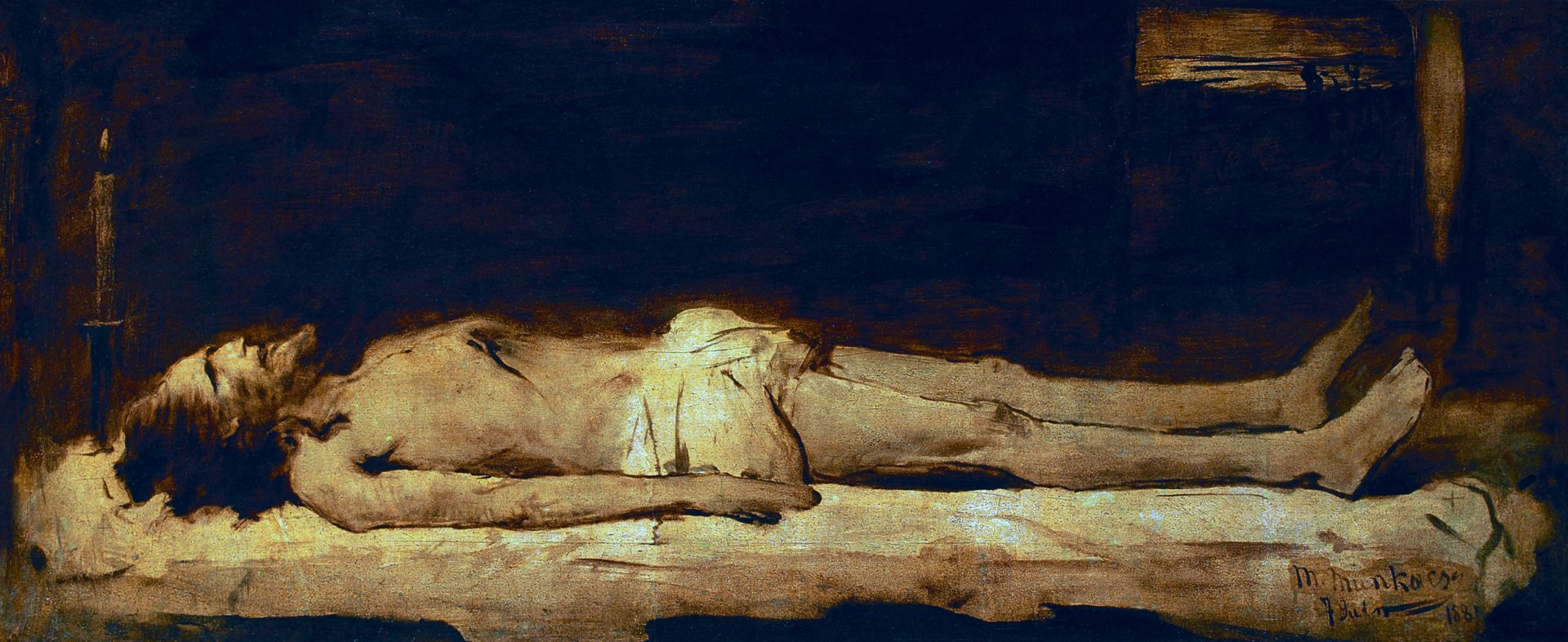
I didn’t grow up in a tradition that observed much of the church calendar. I did celebrate Good Friday: one thing noticeably different here in Scotland from my home in Australia is that Good Friday is a public holiday in Australia, and I would regularly go to church on Good Friday morning for a short, sombre service. Easter Sunday was, of course, the high point of the rudimentary church calendar that we observed in my little Baptist church. But Holy Saturday was a blank – it was a pause, a day for hot cross buns, and doing the usual Saturday things. The space between Jesus’ death and resurrection was never marked by any act of remembrance.
In fact, when growing up (and through my adulthood), in all the different church communities I was a part of, any space between death and resurrection was rarely acknowledged—even at those Good Friday services. Whenever we remembered the events of Holy Week, and remembered Jesus’ death, it was a reflex action to look forward, and to reassure ourselves and each other with the Good News of the Resurrection. Each Good Friday service ended with a “to be continued” that totally spoiled the plot of the next episode.
I think that this is for good reason. Death is a dark topic. We don’t want to sit with death for too long, if we can help it.
But for our brothers and sisters who were following Jesus in the events of Holy Week, things were very different. They couldn’t skip ahead to Easter Sunday. They had to live these events, one painful moment after another.
They experienced the loss of their rabbi, the teacher, the one who cast out their demons, who healed their diseases, who founded a new community around himself… the one who made life make sense, the one who saw them for what they were and did not turn away or reject them, the one who forgave their sins, and who led them on to become more like the person God wants them to be… They experienced the loss of all of this. In the events of Good Friday, they lost their friend, their teacher, their Messiah, their Lord.
They are traumatised by experiencing death up close.
While their path, these last three years, had taken them by some delightfully still and restful waters. They had laid down and rested in luxurious green pastures. Their souls had been well and truly restored. But now, their path has turned a dark corner, and they find themselves walking through the valley of the shadow of death.
When I sit here with the disciples on Holy Saturday, and pause, and simply breathe with them, in the midst of their trauma and their loss, my attention is drawn to two of the minor characters of the drama of John’s Gospel. These two are my kind of people: Joseph of Arimathea, and Nicodemus. These are men of some education and some privilege. They’re religious teachers and authorities, and they are—secretive—disciples of Jesus.
And here, while the climactic scene of Jesus’ death has taken place, in the quiet aftermath after the trauma, they both enter the stage, to take action.
Joseph of Arimathea seems to be a practical man. He uses his access with the Roman governor, Pilate, to ensure that they can take care of Jesus’ body, and care for him in his death, so Jesus would not suffer the further indignity of his body being cast aside or buried in a mass grave. Joseph provides a tomb, as yet unused, in a garden.
Nicodemus, according to our narrative, joins in on this task, and he brought what the text says is an insane amount of spices/perfume to anoint the body. When I say an insane amount, it is around 35kg (70 imperial pounds), which is an industrial quantity of perfume, fit for anointing hundreds bodies for burial. This brings to mind two other extravagant quantities we’ve seen in John’s gospel: the vats of wine at the Wedding at Cana (John 4, just after Jesus’ encounter with Nicodemus) and Mary’s anointing of Jesus’ feet at Bethany (John 12), at the beginning of the week leading up to the events of Good Friday.
These men are doing what they can. Looking after practicalities, and expressing their devotion to Jesus, and their care of the little community of disciples, with the means they have available to them—their time, and their resources. In the grand scheme of things, what they do is not important. (These are not the leaders of the new community. Jesus hasn’t marked them out for that role. They are just trying to be faithful with what they have, even when things have turned dark.) Their actions, ultimately, are not going to change anything: it’s not like they can bring Jesus back from the dead.
No, they do what they can to express their love for Jesus. They are following their traditions (their community burial rites), and using their means to look after others (getting the practicalities done). They find a way to go on, one step at a time. It’s a beautiful response to the trauma of seeing a loved one die, and of losing the future that you thought you had. There are so many worse things that you can do when all your hope has died than what these two did.
Now, there are tiny hints in this passage of what is to come on Sunday morning, after this dark Saturday. But there are only hints. What is to come is from elsewhere: it’s not a result of what these men do.
The garden setting of this tomb is a reminder of the first Garden, in which God created humanity. The virgin tomb brings to mind the virgin womb through which Jesus came to us. These are hints of the possibility of something new breaking in, reminders of God’s creative activity breaking into the world.
But whatever new thing can come in the midst of the darkness of this death must come from God, it must come from elsewhere. It’s a genuinely new thing that is a gift of grace, and not something that these disciples could expect or predict. Whatever is coming is not what the disciples could even bear to hope for. They are not in a position to understand what is to come.
But let’s not skip forward too quickly. Let’s stay here in the quiet and the dark, with our brothers and sisters who are suffering loss, for whom God seems absent, and who are walking through the valley of the shadow of death in their own time, not knowing where it leads. If you have the capacity to offer practical aid (like Joseph) or you are able to express your deep devotion (like Nicodemus), that’s all to the good. But just being with our brothers and sisters in their suffering is something.
You—like Nicodemus and Joseph—are not going to solve the problem of death and you are not going to be able to make the pain go away, but sitting in the quiet and the dark of pain and loss is one way we can express our faith in the God who saves, as we wait for the day of God’s coming.